 Photo: Gregy · CC BY-SA 3.0 pl
Lower Vistula Gothic Road Trip
Follow the Vistula from Warsaw through Toruń, Chełmno, Grudziądz and Malbork to Gdańsk over five or six days.
- Allow
- 5–6 days
- Route
- 502 km
- Drive time
- 5 hr 33 min
- Stops
- 6
This one-way road trip turns northern Poland’s brick architecture into a clear sequence. Toruń begins with a preserved medieval city and Copernican history, Chełmno and Grudziądz keep the Vistula in view at smaller scale, and Malbork’s immense castle supplies the architectural climax before Gdańsk opens onto the Baltic.
Rail serves the big cities well; the car earns its keep between them and should be returned on arrival in Gdańsk. Reserve Malbork entry, understand any one-way rental charge before booking and leave luggage at hotels rather than in car parks.
The road, in one glance
Pinch or scroll with Ctrl / ⌘ to zoom
Drawing the route…
The route earns
its distance
Each pin is selected as a place to do something—not merely proof that you passed through.
 Photo: Emptywords · CC BY-SA 4.0
Warsaw
Leave the capital after its city days with the Gdańsk drop fee and hours confirmed.
Warsaw, officially the Capital City of Warsaw, is the capital and most populous city of Poland. The metropolis stands on the River Vistula in east-central Poland. Its population is officially estimated at 1.86 million residents within a greater metropolitan area of 3.27 million residents, which makes Warsaw the 7th most populous city in the European Union.
 Photo: Domun · CC BY 3.0
Toruń
A remarkably preserved brick-Gothic city ties Copernicus, Vistula trade and gingerbread together.
Toruń (Polish:; German: Thorn ) is a city on the Vistula River in north-central Poland and a UNESCO World Heritage Site. Its population was 196,935 as of December 2021. Previously, it was the capital of the Toruń Voivodeship (1975–1998) and the Pomeranian Voivodeship (1921–1945).
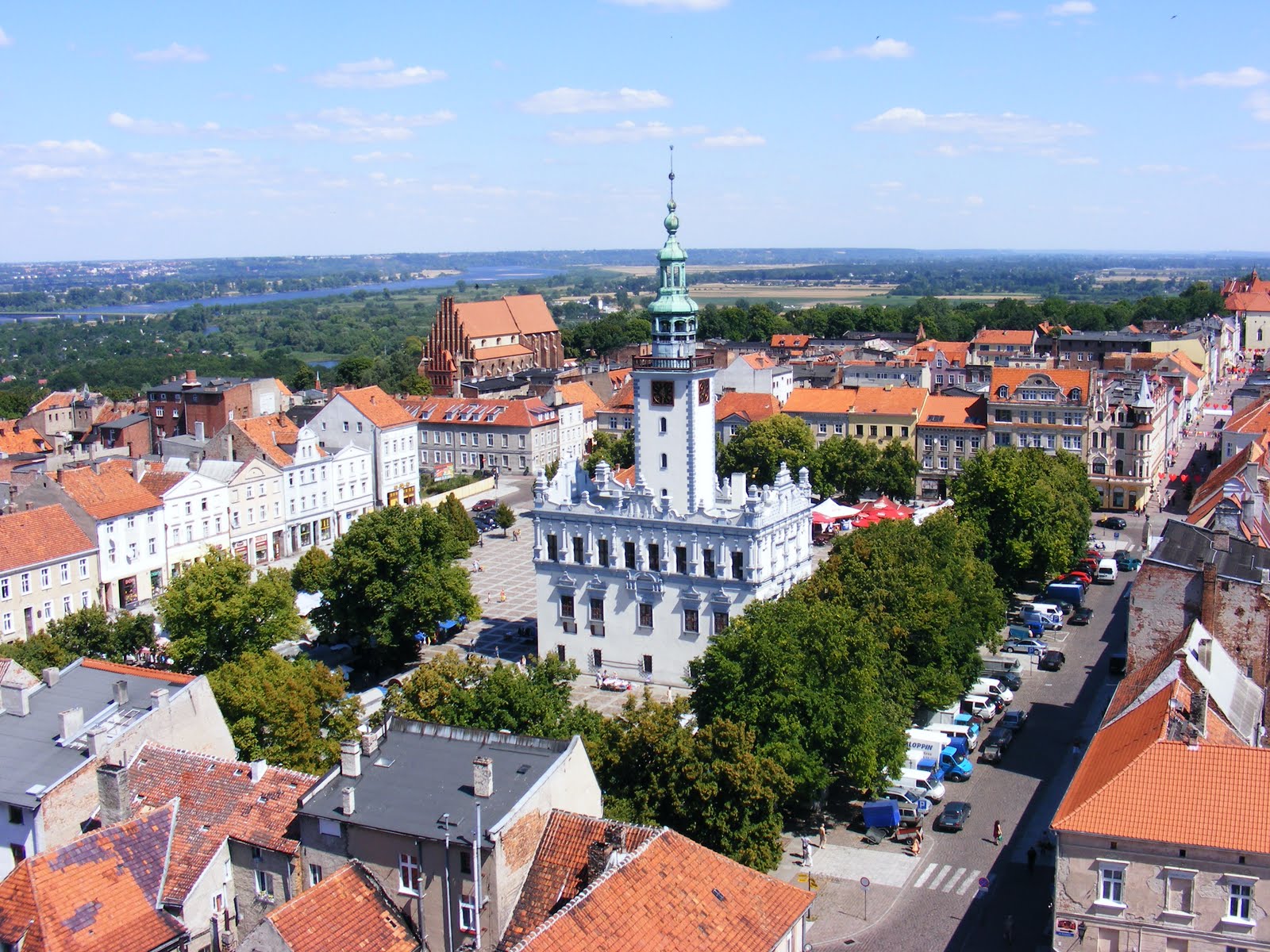 Photo: Kazimierz Mendlik · CC BY-SA 3.0
Chełmno
Medieval walls, churches and a compact grid create a quieter lower-Vistula stop.
Chełmno, historically known as Culm in both German and English (Modern German: ), is a town in northern Poland near the Vistula river with 18,915 inhabitants as of December 2021. It is the seat of the Chełmno County in the Kuyavian-Pomeranian Voivodeship. Due to its regional importance in the Middle Ages, the town gave its name to the entire area, Chełmno Land (and later an administrative unit of the Kingdom of Poland, the Chełmno Voivodeship), the local Catholic diocese and Kulm law, a municipal form of government for over 180 cities and towns in Central Europe, most notably Warsaw, Gdańsk, Toruń, Königsberg, Olsztyn, Płock and Klaipėda.
 Photo: Grzegorz Piotrowski · CC BY-SA 3.0
Grudziądz
A line of historic granaries rises dramatically above the Vistula riverbank.
Grudziądz (; German: Graudenz) is a city in northern Poland, with 92,552 inhabitants (2021). Located on the Vistula River, it lies within the Kuyavian-Pomeranian Voivodeship and is the fourth-largest city in its province. Grudziądz is one of the oldest cities in north-central Poland, founded by King Bolesław I the Brave over 1000 years ago.
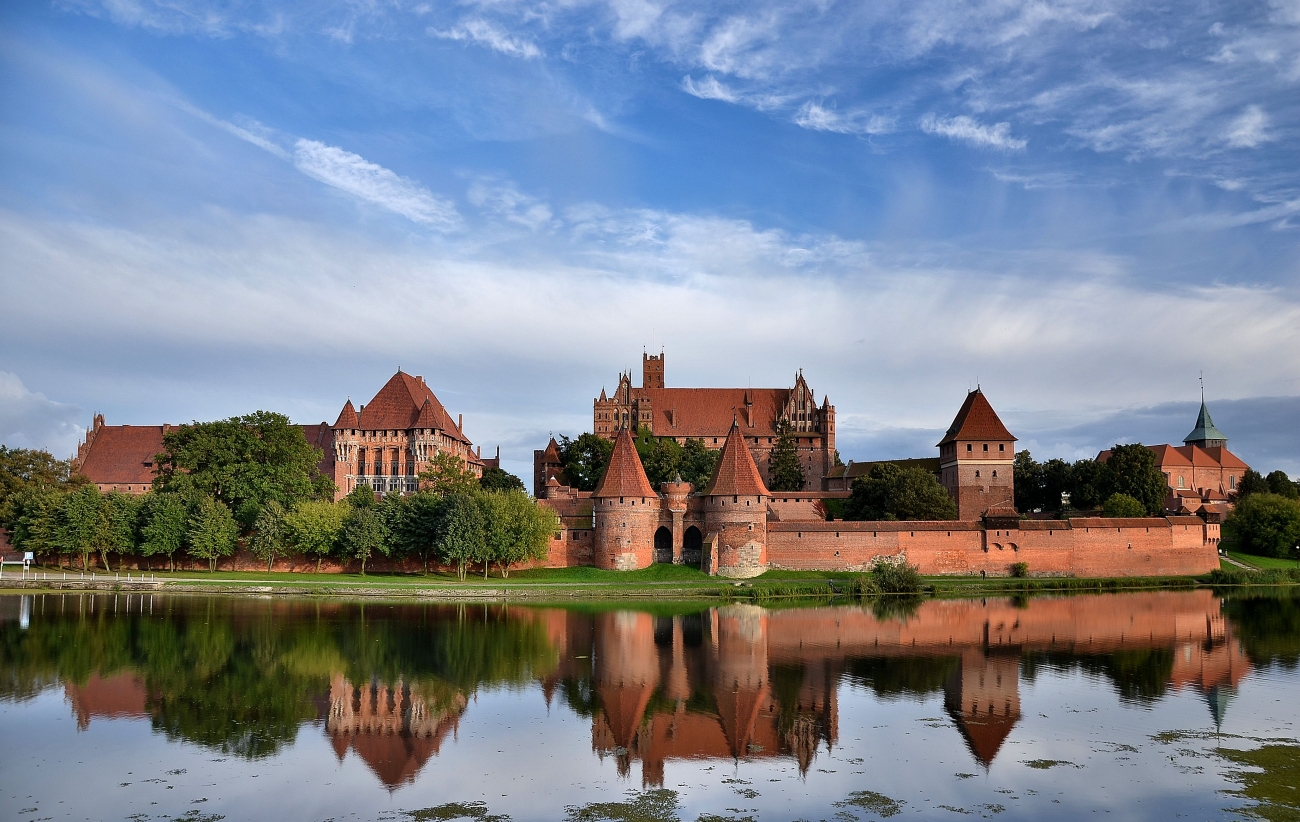
Photo: Gregy · CC BY-SA 3.0 plMalbork Castle
The vast brick castle complex demands a reserved, properly paced visit.
The Castle of the Teutonic Order in Malbork, commonly known as Malbork Castle (Polish: Zamek w Malborku; German: Ordensburg Marienburg), is a Brick Gothic castle complex located in the town of Malbork, Poland, built in the 13th and significantly expanded in the 14th century. It is the largest castle in the world measured by land area and a UNESCO World Heritage Site.
 Photo: Diego Delso · CC BY-SA 3.0
Gdańsk
A rebuilt maritime city, Solidarity history and Baltic atmosphere provide a natural journey’s end.
Gdańsk (Kashubian: Gduńsk; German: Danzig) is a city on the Baltic coast of northern Poland, and the capital of the Pomeranian Voivodeship. With a population of 486,492, it is Poland's sixth-largest city and its major seaport. Gdańsk lies at the mouth of the Motława River and is situated at the southern edge of Gdańsk Bay, close to the city of Gdynia and the resort town of Sopot; these form a metropolitan area called the Tricity (Trójmiasto), with a population of approximately 1.5 million.
Drive the conditions,
not the itinerary.
Confirm one-way rental terms, reserve Malbork and use accommodation parking. Return the car in Gdańsk rather than carrying it through the historic center.
Checked against
the people who run it
Distances and driving times are planning estimates. Conditions, closures, ferries, permits and park rules can change, so check the linked official guidance before setting out.